House On Fire!
This game is a Puzzle Platformer Game, where you play as a small flame that needs to make his way to the couch and set it on fire before burning out.
My main contributions
Programming flame mechanic
I did all the lighting of every room
I programmed the respawn point & candle mechanics.
I did the sound design and integration
etc...
Summary
For this project I had the role of team leader & Lead Designer,
which meant I had to manage a team of 4 while having a tight 3 day
deadline. Since it was part of a gamejam.
We ran into a bunch of problems like
I learned a lot out of this project like the importance of keeping communication open
& applied these things while managing a team for my newest project.
Design & Limitations
We started off with just one simple idea, you're a flame that burns everything it touches. Normally I would prototype this mechanic to see just how it should work, but that wasn't possible here. We only had 2 days to make a game, so no prototype.
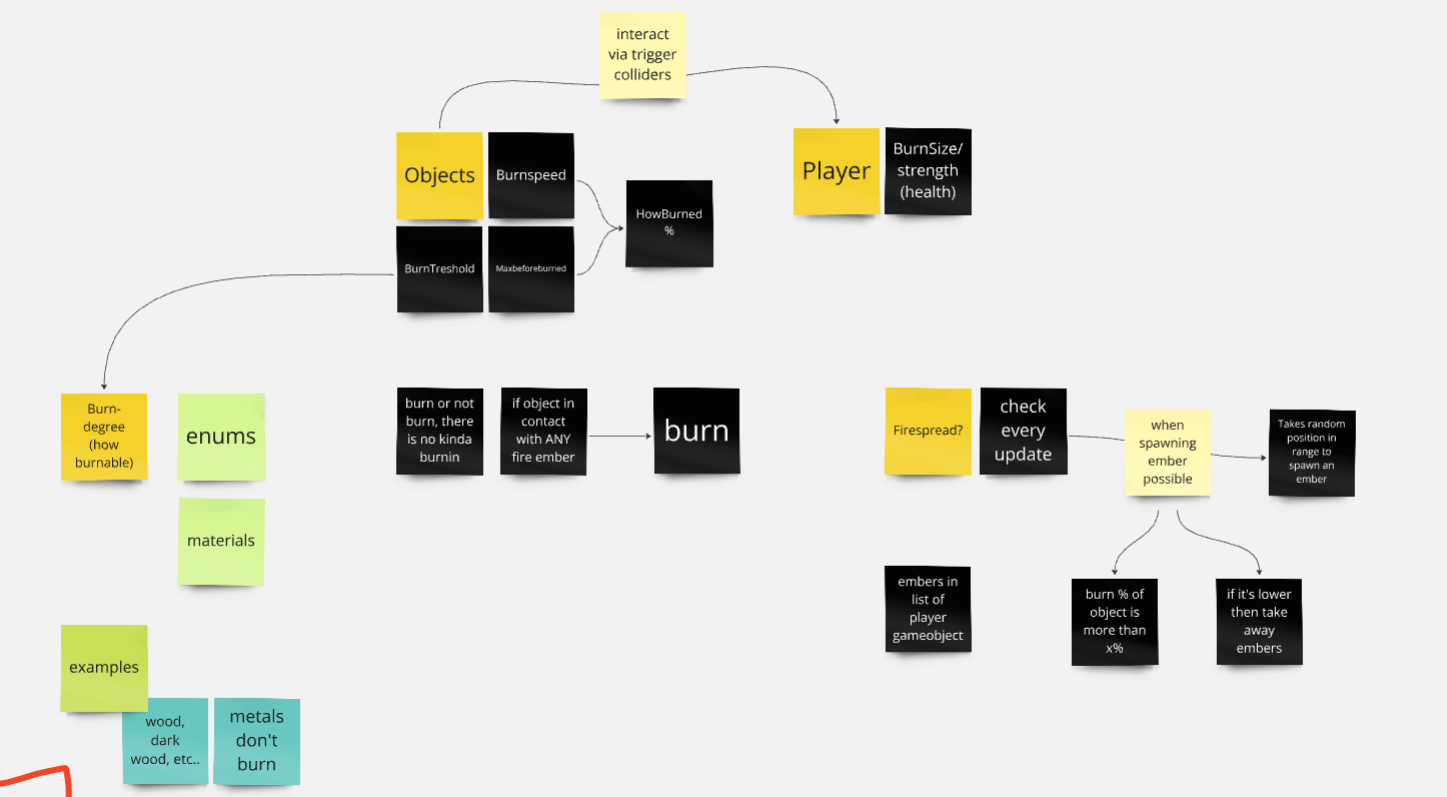
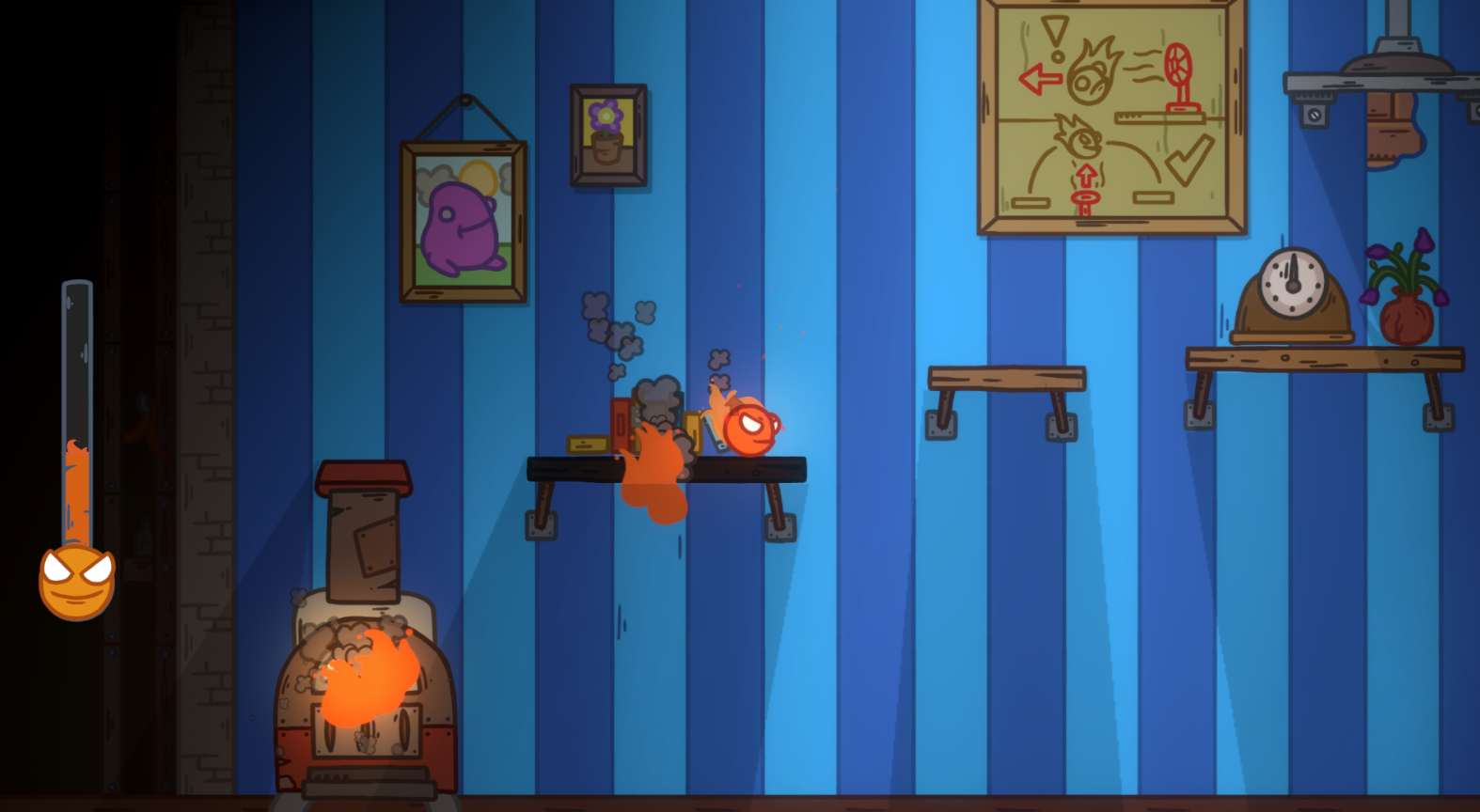
We had one thing going for us, we knew what kind of game it would be.
We were going to make a puzzle platformer, so the firespread should be controlled.
To make design tweaking easier, I programmed some handy functionality into the firespread. I made it so that we could adjust the spread radius
, burndown speed & a few other things.
Level Design Issues
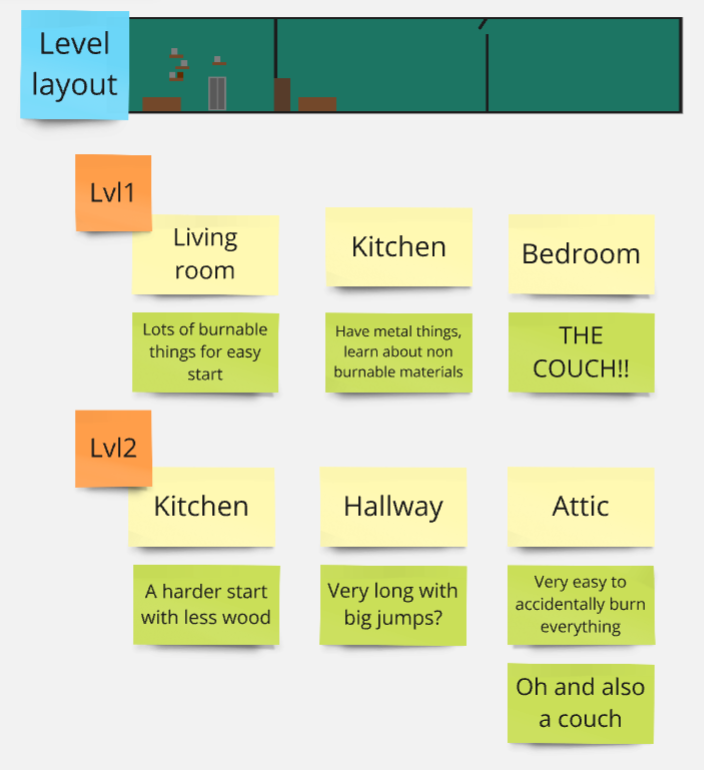
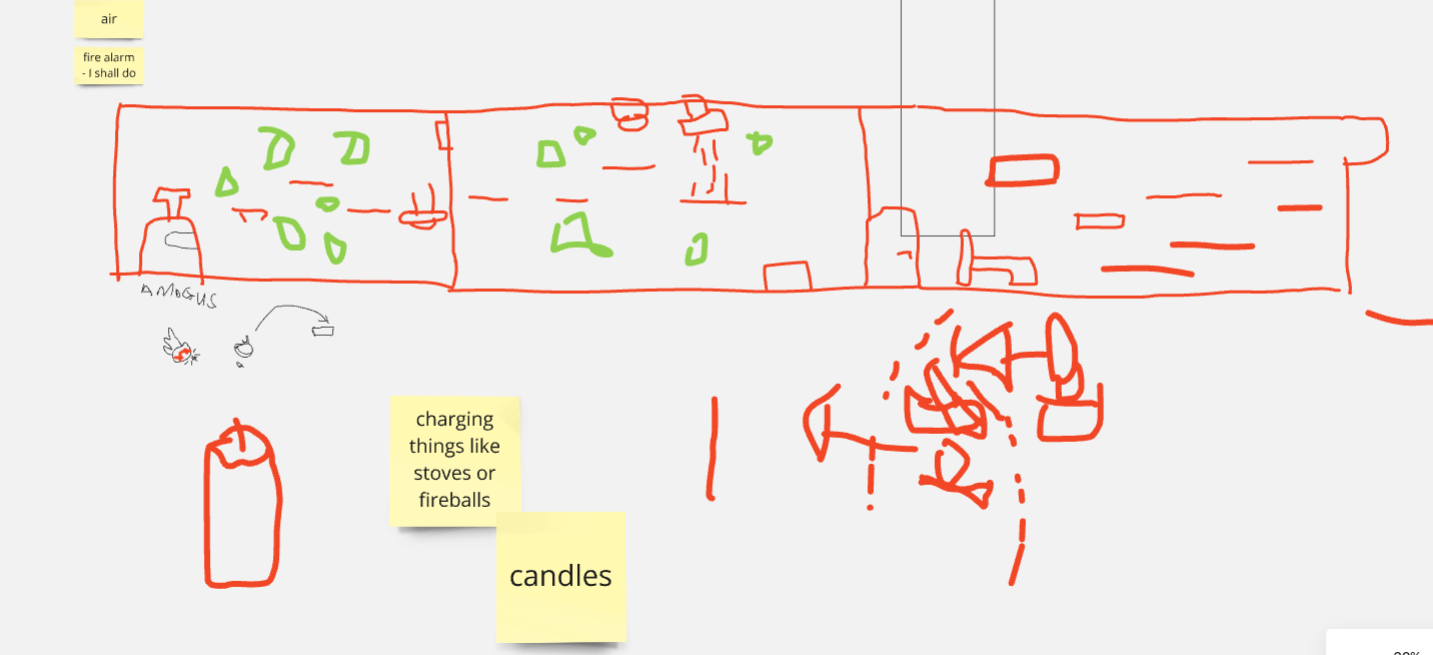
Designing levels was not an easy feat for this game. We needed puzzles that were difficult to find, but not too difficult to complete.
If you took too long to complete you'd burn out before you could do it. So you'd have to start over again, despite knowing the solution.
The biggest hurdle we faced was bad communication, people would do things without discussing them. This led to a buggy end result.
Although in its core it's still a fun game, with better communication this project could've placed a lot better.